
What to know before you book
- Golden window: days 5 to 14 after birth, baby is naturally curled, deeply sleepy, and at their most poseable
- Baby clothing: soft wraps and bare skin are the most timeless choice; steer clear of stiff or layered outfits
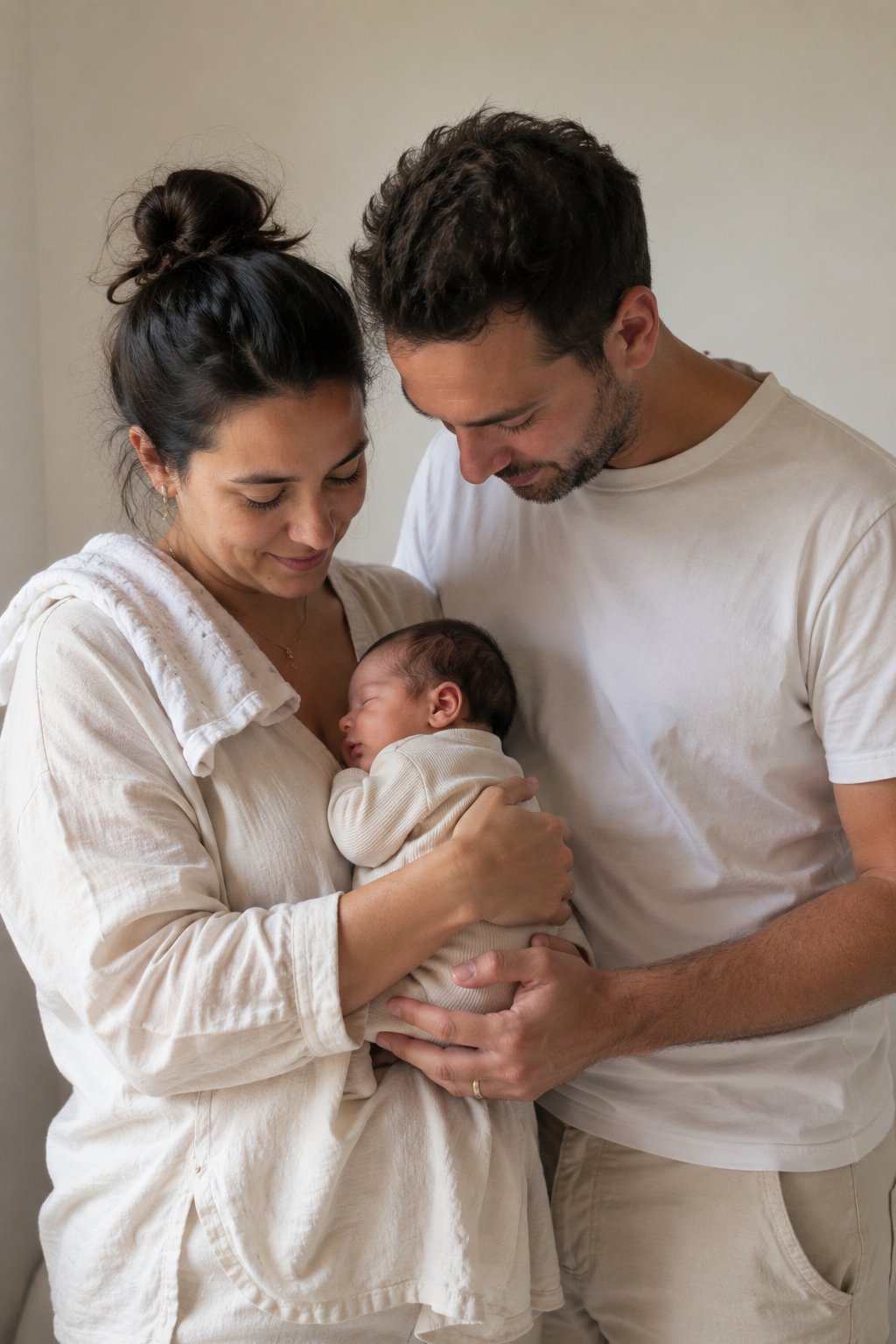
- Parent outfits: neutrals and soft tones keep the focus exactly where it belongs, on your baby
- Props: wicker baskets, chunky knit swaddles, delicate headbands, and textured blankets, simplicity always wins
- Safety is non-negotiable: composite poses like the "froggy" are always digitally merged from two safe shots, never try these without a trained professional
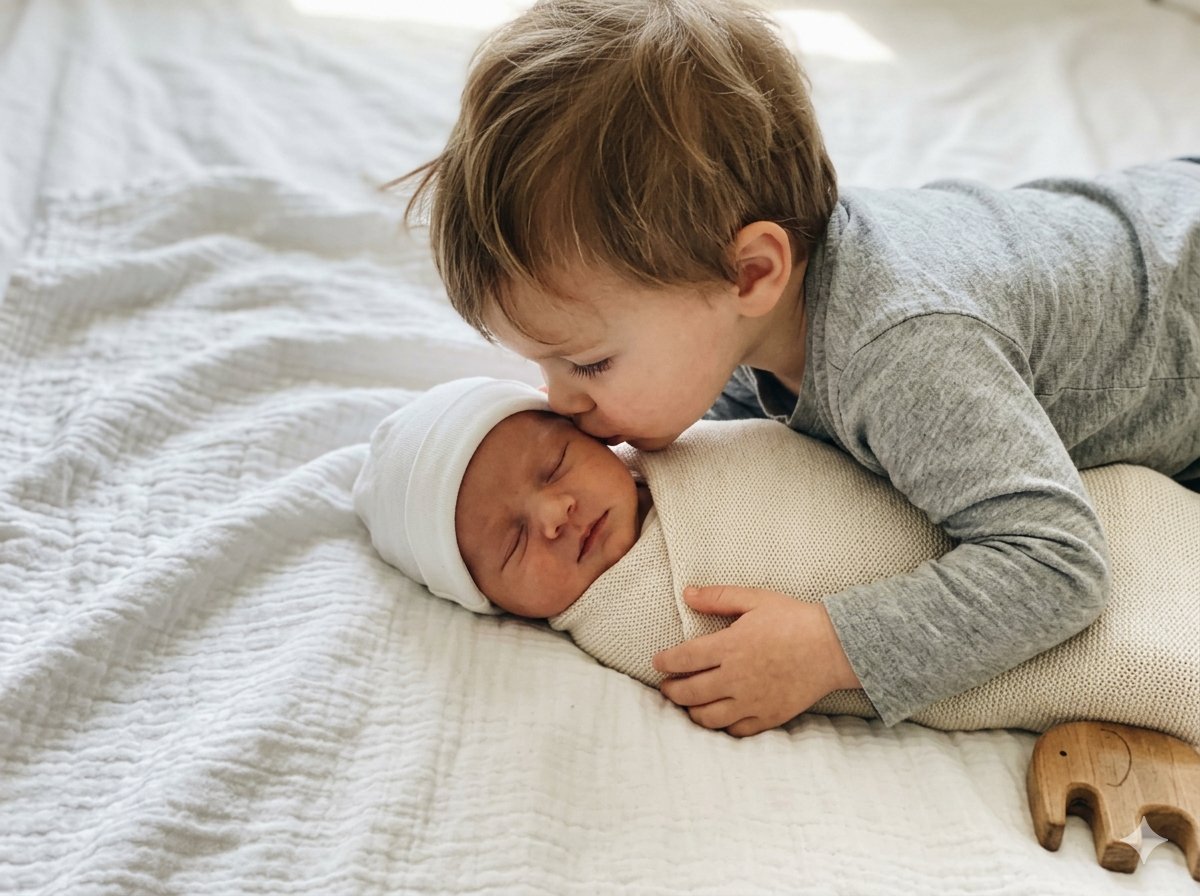
- Include siblings: the images where an older child meets a newborn for the first time are often the ones families treasure most
Two weeks. That's all you get.
The window when your baby holds that instinctive curled posture, sleeps through almost anything, and can be gently settled into the most beautiful poses is remarkably brief. According to the Central Statistics Office (CSO), 54,062 babies were born in Ireland in 2024, and most of their parents will tell you the same thing afterwards: those first days passed in a blur. A professional newborn photoshoot is how you hold onto them. This guide is everything you need to plan one well: the outfits, props, poses, themes, and practical details that make the difference between a session you're glad you did and one you'll always wish had gone differently.
- → Newborn photoshoot themes that work in Ireland
- → Props: what your photographer uses and why
- → Poses, positions & safety
- → What to wear: baby and parents
- → Including brothers and sisters
- → Frequently asked questions
Newborn Photoshoot Themes That Work in Ireland
Before you think about specific props or outfits, it helps to settle on an overall aesthetic. Your theme shapes every other decision, the colours, the textures, the mood of the finished images. Here are the styles Irish families choose most, and what each one actually looks like in practice.
Natural and boho
This is the most popular style among Irish parents right now, and it suits the Irish landscape and interior aesthetic beautifully. Think undyed linen wraps, dried wildflower elements, macramé textures, warm wood tones, and earthy palettes from ochre to sage. It works equally well in a studio or in a home environment. The images feel organic, warm, and genuinely timeless.
Minimalist and clean
White on white, with a single textural element as accent. The baby becomes the entire composition, nothing else competes. This is a striking, editorial-adjacent style that ages extraordinarily well. If you're drawn to Scandinavian interiors, this is probably your aesthetic.
Lifestyle at home
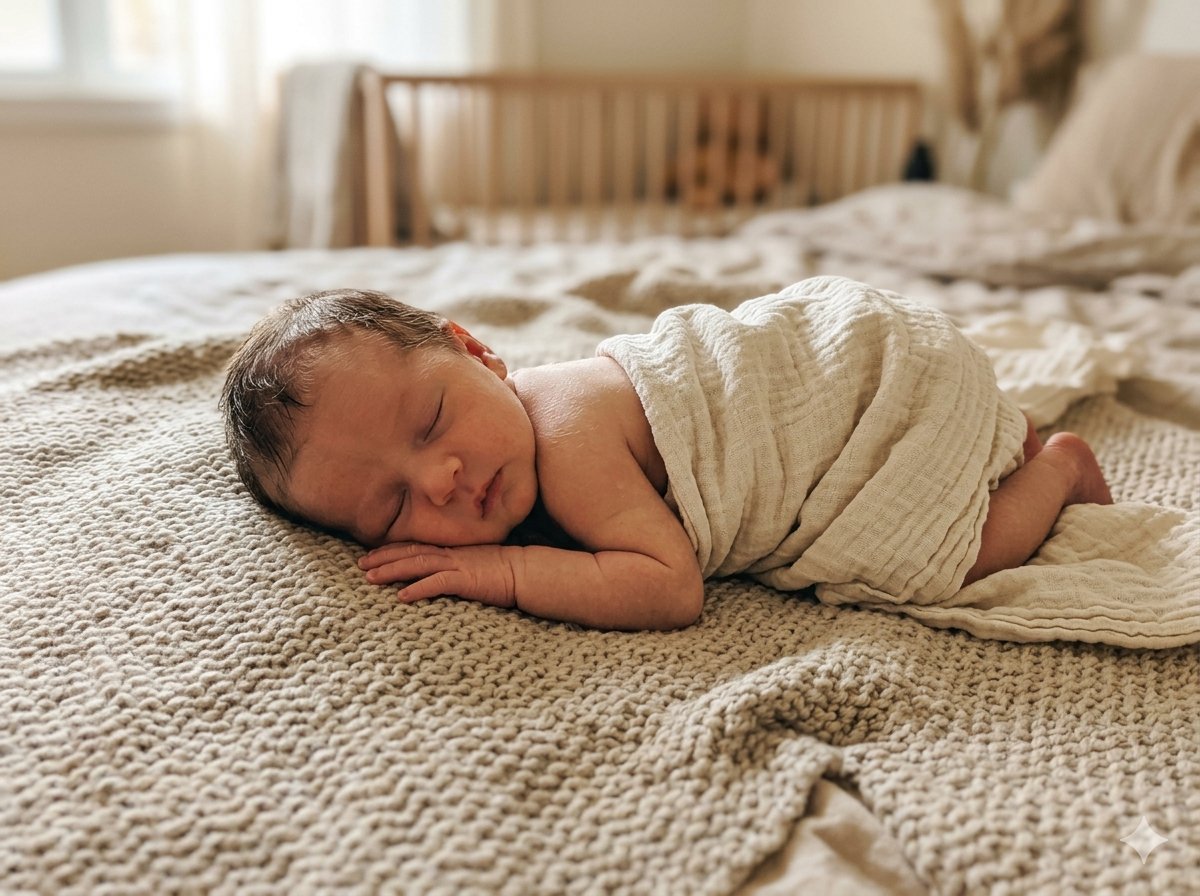
No studio, no backdrop, no props, just your family in your own home, in the light that falls through your actual windows, on your own bed or sofa. This style has grown enormously in popularity across Ireland in recent years because the images are so genuinely personal. The light in Irish homes, that particular northern softness, lends itself naturally to this approach.
Seasonal themes
If your baby arrives in December or January, you have a natural opportunity for those soft, cosy festive images that are genuinely magical rather than forced. A deep forest green or burgundy wrap, a tiny knitted bonnet, a single string of fairy lights softly defocused in the background, restraint is everything here. Two seasonal elements, maximum. The same principle applies to spring babies (florals, pastels, outdoor lifestyle elements) and autumn arrivals (dried botanicals, warm amber tones, textured knits).
Story-led or personal
A miniature GAA jersey in your club's colours. A tiny book nestled beside baby's hand. A family heirloom wrapped around a sleeping newborn. When a photoshoot tells something true about your family, the images carry a weight that generic beautiful shots simply can't match. Share your ideas with your photographer early, these are the sessions they often enjoy most, and a good specialist will know how to make a personal element work photographically.
Thinking about a maternity session to bookend the newborn shoot? Our maternity photography guide for Ireland covers timing, settings, and what to expect from bump-to-baby photography.
Props: What Your Photographer Uses and Why
A well-chosen prop adds context and texture to a photograph. A poorly chosen prop overwhelms it. Your photographer will have a curated collection of everything needed, your job is simply to understand what's available and share any preferences before the day.
The essential props in any newborn photographer's kit
- Specialist posing beanbag: the invisible hero of newborn photography. Almost every classic posed newborn shot, the flat-lay, the bum-up, the overhead, is taken with baby resting on a large, padded beanbag positioned at the right height for the camera. You rarely see it in the final image, but it's essential for safety and stability
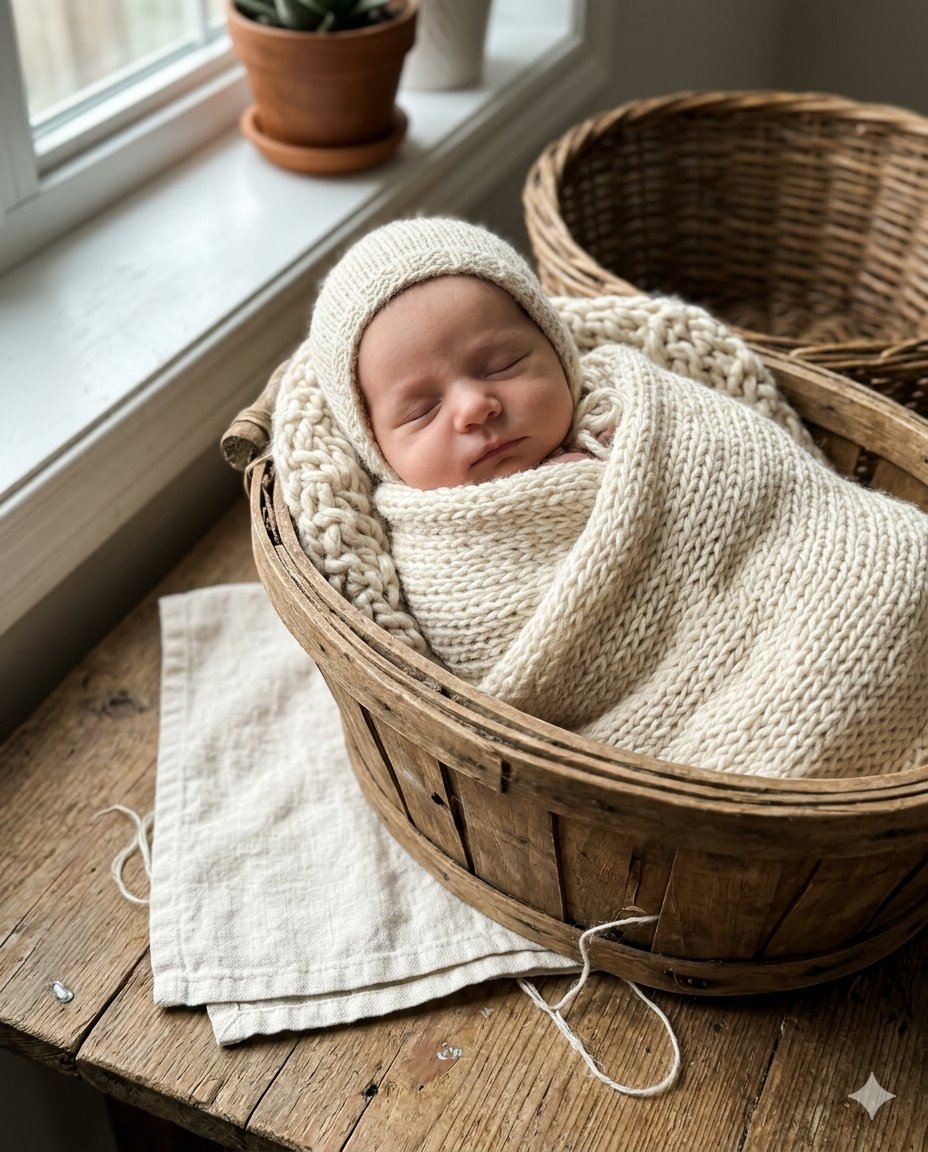
- Stretch wraps: jersey, muslin, gauze, lace-overlay, chunky knit, each creates an entirely different mood. Wrapping a baby tightly and securely is a skilled technique that also deeply calms most newborns. Your photographer will typically have twenty or more wraps in a range of tones and textures
- Wicker and wooden baskets: the curved interior of a basket frames a newborn beautifully, and the natural material adds warmth and texture that reads well in photographs. Lined with a soft blanket, this is one of the most versatile setups in newborn photography
- Blankets and textured layers: faux fur, velvet, fine knit, and woven linen all photograph differently and serve different purposes, as a backdrop, a nest, or a swaddling layer. Quality here matters more than quantity
- Headbands and bonnets: small accent pieces that add personality without dominating the image. Many Irish photographers source handmade props from local Irish craft makers for a distinctively personal feel
What not to bring
Avoid bringing props from home unless you've discussed them with your photographer in advance. A much-loved soft toy or family heirloom can be beautiful in the right hands, but it can also throw the whole colour palette and composition out of balance if it hasn't been factored into the plan. When in doubt, ask first.
A note on safety and Irish photographers: Newborn photography requires specific training in baby handling, settling, and safe positioning. When booking in Ireland, ask your photographer about their newborn safety training and whether they hold a recognised qualification. Accreditation bodies such as the Irish Photographic Federation (IPF) or international specialist training programmes are a meaningful indicator that your photographer understands how to achieve beautiful poses safely. Your baby's wellbeing must always come first, and a well-trained photographer will never compromise on that.
Poses, Positions & Safety
This is the part of newborn photography that looks effortless in the finished images and involves the most expertise behind the scenes. Great poses require a warm studio, a deeply settled baby, and a photographer who knows exactly what they're doing.
Classic solo poses
The most enduringly popular newborn poses are achieved when baby is in their deepest sleep, usually 20 to 30 minutes into the session, after a feed and some time to settle. A studio kept at around 27°C, combined with white noise and a full belly, creates the ideal conditions.
- The tucked side pose: baby curled naturally on their side, knees drawn up toward their chest, a position that mirrors what they knew in the womb. The simplest of all the poses, and often the most quietly beautiful
- The bum-up (tummy pose): baby lying face-down on the beanbag, that adorable bottom raised, head resting on their folded hands. The photographer shoots from overhead or at baby's level. This is done at floor level with a parent always nearby
- The basket nest: baby settled inside a prop, basket, bowl, or wooden crate, in a curled position, swaddled or lightly wrapped. The prop provides both a physical boundary and a natural frame for the image
- The swaddle flat-lay: baby wrapped firmly and securely in a stretch wrap, lying on a textured blanket or the beanbag. Clean, minimal, and deeply satisfying, especially when the wrap colour is chosen to complement your nursery palette
- The froggy pose: the iconic image of a newborn apparently resting their chin on their hands, apparently deep in thought. This is always created from two separate photographs, baby is never actually supported only by their own hands. The two images are composited in post-processing. This pose must only ever be performed by a photographer with specific composite posing training. It is never safe to attempt at home
Family and connection shots
Some of the most powerful images from any newborn session are the ones that show the relationship, the size of a parent's hands against a newborn's whole body, the way a family holds together around this tiny new arrival.
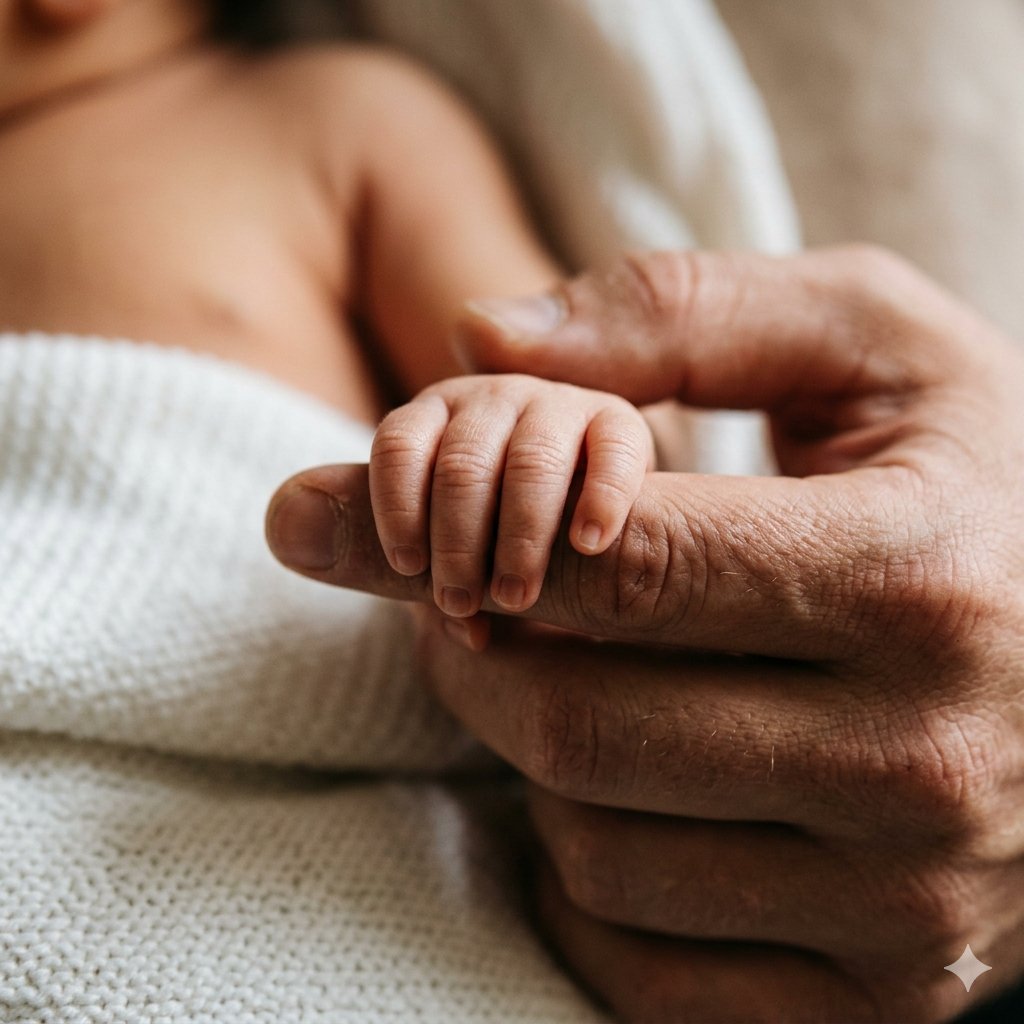
- The hand comparison: one of the most universally requested shots, a parent's finger resting inside a newborn's curled fist. The size contrast never loses its power
- The chest hold: parent cradling baby against their chest, cheek to cheek or baby's face nestled into the parent's neck. Intimate and deeply emotional
- The overhead family portrait: everyone lying on a white backdrop, baby in the centre, parents, siblings, the whole family looking up at the camera. Beautiful for framing and for capturing the family at this precise, unrepeatable moment
- The profile cradle: baby held upright against a parent's shoulder, both faces in profile, a clean, elegant composition that captures both subjects in the same frame without either dominating
What to Wear: Baby and Parents
Outfit choices have an outsized effect on the finished images, not just how your baby looks, but how the whole set of photographs coheres as a collection. The good news is that the best answer is almost always the simplest one.
Dressing your newborn
Counterintuitively, the least amount of clothing often produces the most beautiful images. A baby wrapped in nothing but a soft muslin or a chunky knit swaddle, with a delicate bonnet or headband as the only accent, creates the kind of images that look just as beautiful on a wall in twenty years as they do today.
When you do want your baby in clothing, these are the options that photograph best:
- Stretch wraps: available in your photographer's collection in dozens of textures and tones, this is the most versatile and most reliable option
- Simple sleepsuits or vests: choose footless styles to show those tiny toes, and short sleeves to show off those chubby newborn arms. Plain fabrics in a single colour always work better than prints
- Knitted prop outfits: rompers, bonnet sets, and wrap cardigans in fine knit. Many Irish newborn photographers stock handmade pieces from Irish craft makers, always worth asking what's available
- Halo headbands and knotted bonnets: small accents with a big visual impact. Delicate lace or floral headbands for girls, simple knotted cotton or knit bonnets for any baby
Colour palette for baby: neutrals and soft earth tones, ivory, oat, blush, warm cream, sage, dusty rose, soft terracotta, are reliably timeless. Bright primary colours, bold patterns, and anything with text or logos will date quickly and draw the eye away from your baby's face.
Fabric choices: soft, breathable, and stretchy. Cotton, jersey, and fine knit drape naturally and photograph cleanly. Stiff denim, synthetic fabrics, and scratchy wool will show in the images and will also make your baby less comfortable.
Dressing yourselves
Your outfit is less prominent than your baby's, but a distracting colour or a busy pattern can unbalance an otherwise beautiful image. The goal is to complement, not compete.
| Good choices | Avoid these |
|---|---|
| Neutral tones: white, cream, oat, soft grey, warm navy | Bold patterns, checks, or stripes |
| Natural fabrics that drape well, linen, cotton, jersey | Logos, slogans, or busy prints |
| Semi-fitted silhouettes, nothing stiff or shapeless | Very formal clothing that feels stiff on camera |
| Layers you can remove (the studio will be warm, around 27°C) | Fluorescent or saturated colours that reflect onto baby's skin |
| Understated jewellery, a simple ring or fine necklace | Chunky or sharp jewellery that could catch on baby |
One practical note specific to Irish winters: if your session is in the colder months, remember that the studio temperature is kept very high for baby's comfort. Dress in easy-to-remove layers and bring a change of top if you're planning family portraits, you'll feel it after twenty minutes in a heated room.
If you're booking a lifestyle session at your home rather than a studio, the same colour logic applies, but you can also let your home's existing tones inform the palette. A pale wooden floor, a white-painted wall, a soft grey sofa: these all become part of the image in a lifestyle shoot.
Including Brothers and Sisters
If you have an older child, or more than one, including them in part of your newborn session is almost always worth doing. Many Irish parents say the sibling shots turn out to be the images they display most prominently. The catch is that children require a different kind of management than a sleeping newborn, and the approach matters enormously.
Making sibling shots work
- Start with the older child: before the camera is involved, give them time to meet the baby properly, at their own pace. When a toddler feels like an active participant rather than an inconvenient extra, everything goes more smoothly
- Keep poses simple and natural: an older sibling sitting cross-legged with baby settled safely in their lap (a parent just out of frame), or both children lying side by side on a soft blanket, these work. Complex arrangements involving a child who would rather be doing anything else do not
- The spontaneous reaction shot: ask your photographer to watch for the unguarded moment, the expression on a three-year-old's face when they look at their new sibling without being told to. These candid frames are often more valuable than any posed image
- Fifteen minutes is enough: keep the sibling section short. If an older child has genuinely lost interest and is showing it, stop, a reluctant child cannot produce a natural-looking photograph. Ten willing minutes beats thirty forced ones
- A small reward at the end: a sticker, a treat, a particular activity they enjoy, acknowledged before the session begins as what happens when they've done their bit. It works, and it's entirely reasonable
For a full overview of what's involved from a newborn session through to the first birthday, our guide to baby photography styles and techniques in Ireland explains the different approaches at each stage.
Frequently Asked Questions
How soon after birth should I book a newborn photoshoot in Ireland?
Book during your pregnancy, not after your baby arrives. The ideal session window, days 5 to 14 after birth, fills up fast, and specialist newborn photographers in Irish cities (particularly Dublin and Cork) often have waiting lists of 8 to 12 weeks. Reaching out in your second trimester gives you the best chance of securing your first-choice photographer. Most will provisionally hold a slot around your due date and confirm the exact session date once your baby is born.
Should I go to a studio or book a home session?
Both produce excellent results, the right choice depends on what kind of images you want. A studio gives your photographer complete control over light, temperature (kept at around 27°C for your baby's comfort), and the backdrop environment, which means more variety in a single session. A home lifestyle session trades that control for authenticity: the images are of your actual home, your actual light, your actual world. A growing number of Irish photographers offer both, and some will bring portable studio equipment to your home for a hybrid approach. Ask what your shortlisted photographers offer before deciding.
What should I bring to a newborn photoshoot?
Your photographer's studio will supply everything needed for the shoot itself, props, wraps, bonnets, backdrops. What you need to bring: nappies and wipes (more than you think), a change of clothes for baby (in case of the inevitable), formula or anything you need for feeding, a dummy if your baby uses one (invaluable for settling), and a spare top for yourself. If you have a particular prop or family item you'd like included, discuss it with your photographer beforehand rather than arriving with it on the day, they'll be able to plan how to use it properly.
Which newborn poses are safe, and which aren't?
Any pose that works with your baby's natural body position, curled on their side, settled on their tummy on a beanbag, or snugly wrapped, is safe in trained hands. The poses that look like they might be risky, particularly the "froggy" position, where baby appears to balance on their hands, are always composite images: two separate safe photographs merged together in editing. Your baby is never actually in the position the image suggests. The critical rule: these composite poses must only be attempted by photographers with specific training in the technique. Never recreate them at home, under any circumstances.
How long does a newborn photoshoot take?
Plan for 2 to 4 hours, longer than most people expect. A newborn dictates the pace entirely. There will be feeds, nappy changes, settling periods, and moments where baby simply needs to be held before they'll drift off deeply enough to pose. None of this is a problem, it's simply the nature of newborn photography, and a specialist photographer builds this time into the session from the start. Rushing a newborn session produces worse images and a more stressful experience for everyone.
How much does a newborn photoshoot cost in Ireland?
Prices vary by location and photographer. Session fees alone can run from €125 (e.g. Sheena Griffin Photography, session only, no prints) to €150 (e.g. PhotosByJen), while inclusive packages that bundle session and prints range from €395 (e.g. Sinéad Feeney Photography, includes 3 prints) to €595 and above. Premium specialists with fine art collections (albums, wall art) can reach €845-€1,000+. As a broad guide for budget planning: €250-€420 for entry-level packages (10-15 edited images), €420-€570 mid-range, and €570-€900+ premium. Dublin photographers typically charge 25-40% more than those in Cork, Galway, or Limerick. For a full regional breakdown, see our baby photographer cost guide for Ireland 2026.
Can I choose my own theme, or does the photographer decide?
Your session is a collaboration. A good photographer will have their own aesthetic and prop collection, but they will absolutely work with your preferences. The best results happen when parents share their ideas early (mood boards, colour preferences, anything personal they'd like included) and then trust their photographer's expertise in how to execute those ideas photographically. Bring your ideas to the initial consultation, ask how the photographer would approach them, and pay attention to whether their answer makes you feel heard. That dynamic tells you a great deal about how the session itself will go.
Those moments are worth holding onto
Ireland's newborn photographers range from community studios offering accessible packages from around €250, to highly sought-after specialists with year-long waiting lists and portfolios that genuinely stop you in your tracks. What they share is the ability to take something that passes in a blur, those first impossible days with a tiny new person, and give it permanence.
The props, poses, and outfits covered in this guide are the vocabulary of newborn photography. But the image that will hang on your wall for thirty years is the one that captures something true about your family at this moment. That comes from preparation, from choosing the right photographer, and from walking into the session knowing what you want and trusting the person you've booked to help you get there.
Read our guide to choosing a baby photographer in Ireland for the questions to ask before you book, what a professional quote should include, and the red flags to watch for. When you're ready to start comparing photographers, our directory covers professionals across Dublin, Cork, Galway, Limerick, Waterford, and every corner of Ireland.
Find your newborn photographer in Ireland
Browse portfolios, compare styles and packages, and book directly with trusted specialists across the country.
Find a newborn photographer near you →Related guides
- How to Choose a Baby Photographer in Ireland, 2026 Guide
- Baby Photography Styles in Ireland: Finding the Look That's Right for You
- Maternity Photography in Ireland: Setting, Timing and What to Expect
- Maternity Outfits and Poses Ireland: Complete Guide
- Irish Baby Passport Photos: Requirements, Costs, and Where to Go

