
What You Need to Know at a Glance
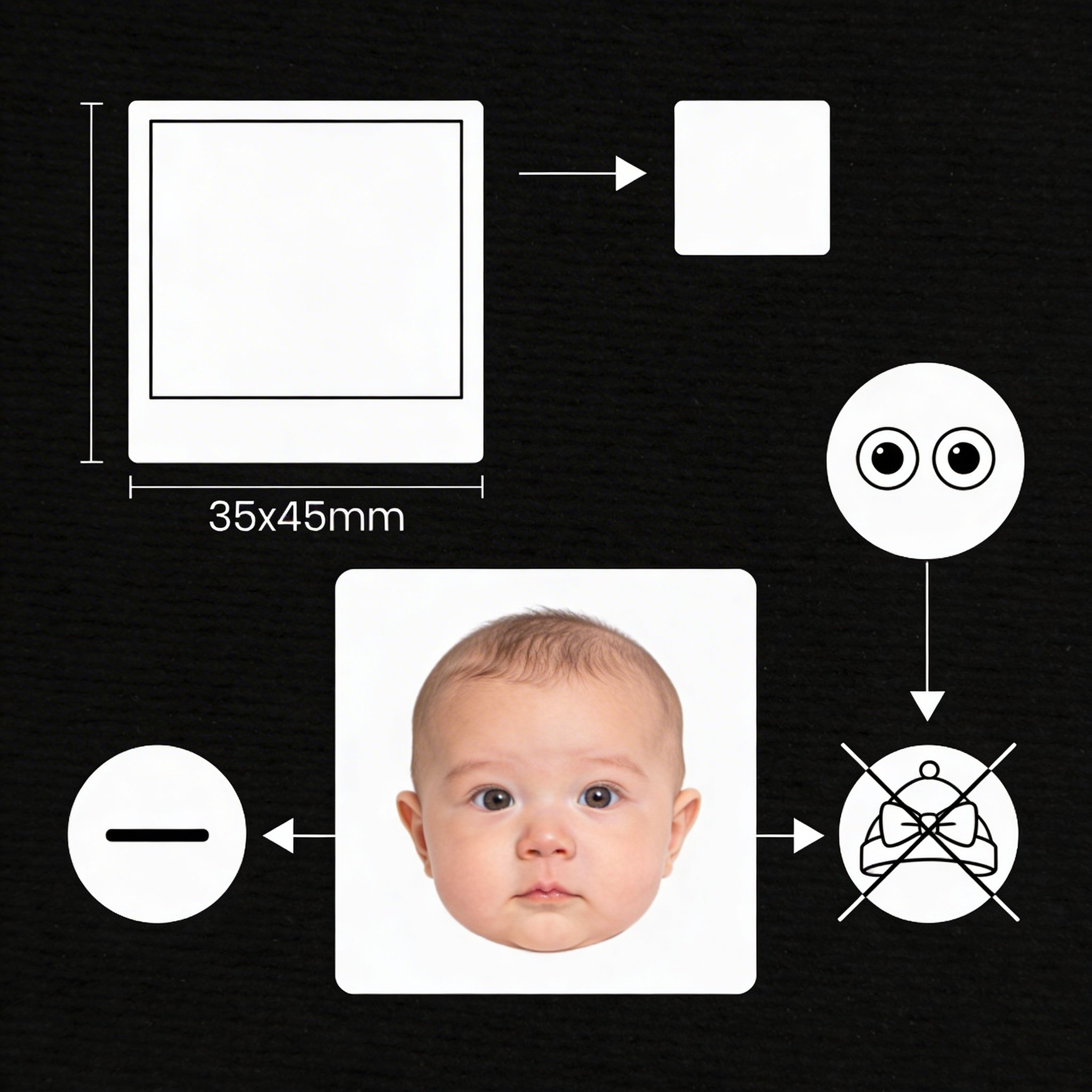
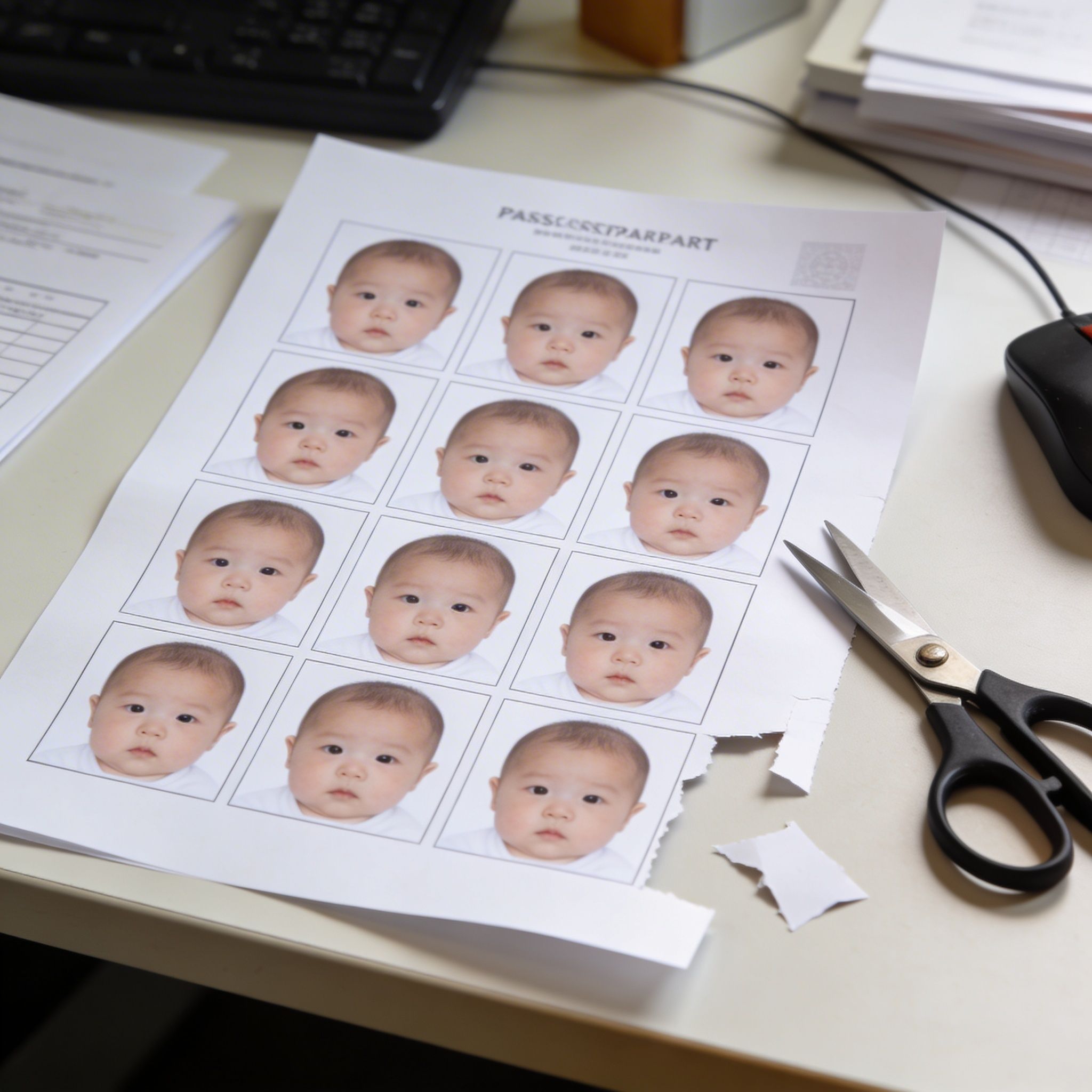
- Photo size: 35mm wide × 45mm tall (printed), face occupying 70–80% of the frame
- Background: completely plain, light grey, white or cream, no objects, no patterns
- Valid for: 6 months from the date taken (more generous than many parents expect)
- Babies: photograph lying on a plain white surface; no visible supporting hands; no soothers
- Best moment: 30–45 minutes after a feed, during a natural alert phase, not just before nap time
- Smartest choice: A specialist baby photographer (€10–€18) rather than a self-service booth for any baby under 6 months
Your new baby needs a passport, and that means navigating the photo requirements set by the Irish Passport Service, with a baby who has their own ideas about when to open their eyes or stay still. If that sounds daunting, take a breath. Thousands of Irish parents go through this every year, and with the right preparation it really is manageable.
This guide walks you through the actual requirements from the Department of Foreign Affairs, the best ways to prepare your baby for the session, and everything you need to avoid a rejection, so your first application is also your last.
Where to Get Your Baby's Passport Photo in Ireland
Before diving into the rules, it helps to understand your options, because the right choice depends heavily on your baby's age and whether they can support themselves.
Specialist Baby Photographers: The First Choice for Newborns
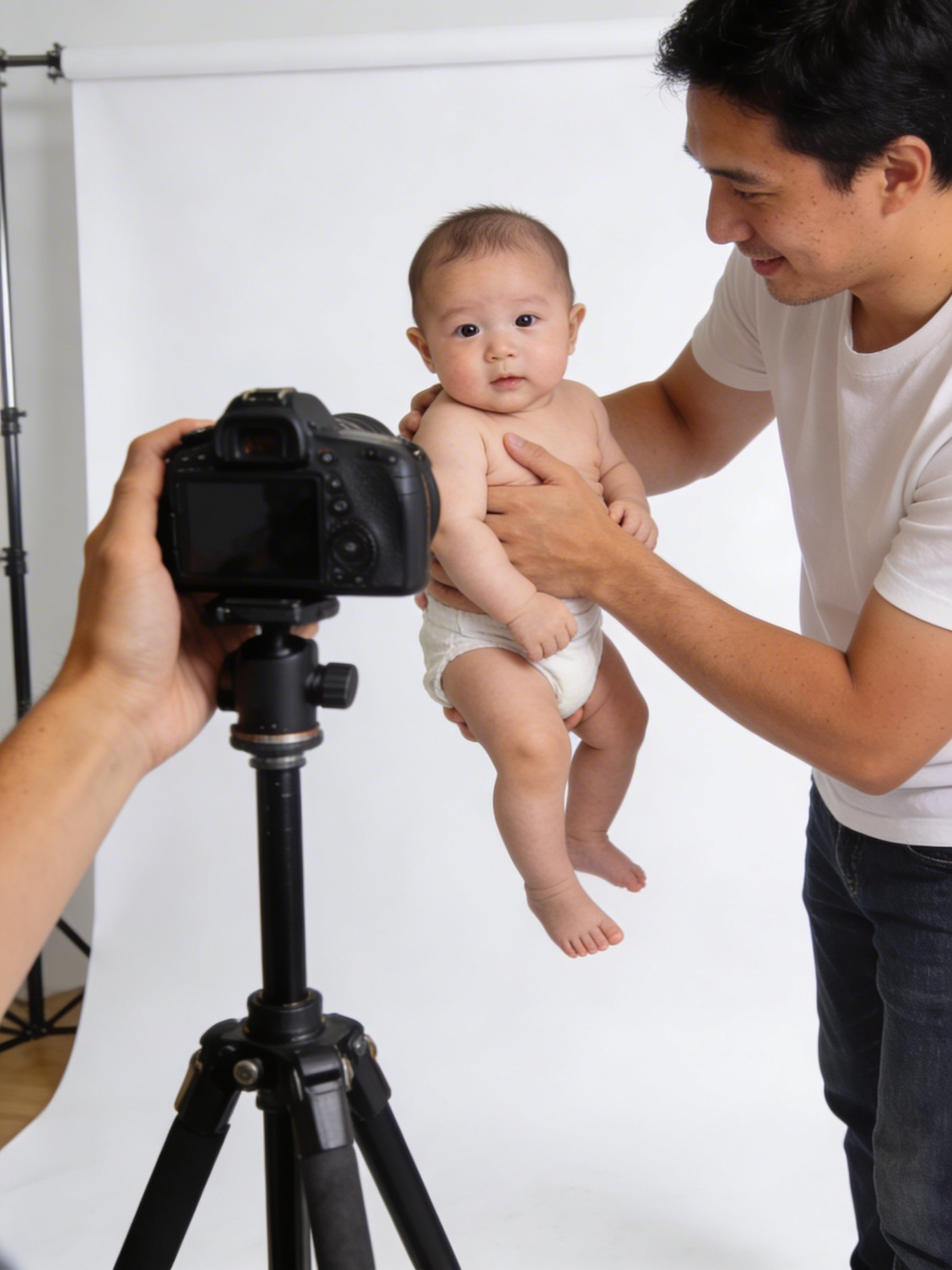
For any baby who cannot yet hold their own head up, a photographer with genuine newborn experience is the most reliable route. A good specialist will have a padded flat surface for lying shots, gentle diffused lighting that won't startle your baby, and, crucially, the patience to wait for the right moment rather than rushing through a fixed number of attempts.
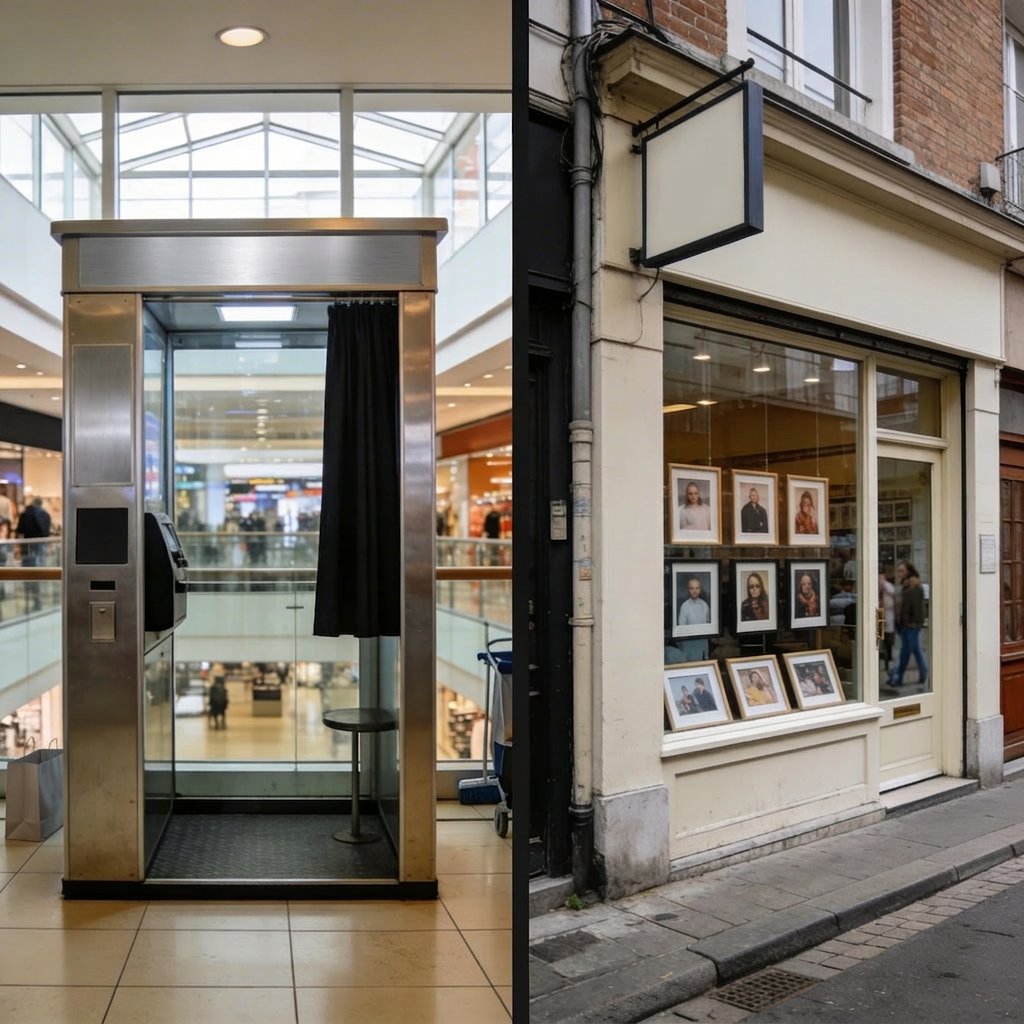
Studios like those in our directory of Irish baby photographers offer passport photo sessions as a standalone service, typically from €10 upwards. For Dublin, Cork, Galway, and other cities, you'll find options both in-studio and as home-visit services for the earliest weeks.
Pharmacy and Chemist Services
Many Irish pharmacies offer passport photo services suitable for babies and young children. Unlike a self-service booth, a staff member takes the photo, which means they can position your baby correctly and try multiple times. Pharmacies such as Lombard Pharmacy and Phelan's Pharmacy advertise this service, as do many independent chemists across the country.
Photo Booths: Only Once Your Baby Sits Unaided
Self-service photo booths (Photo-Me booths, for example, are found in many post offices and shopping centres across Ireland) are really only suitable once your baby can sit stably without any support, typically from around 6–7 months. Even then, the time pressure, limited attempts, and risk of visible supporting hands make them a less forgiving option.
At-Home Digital Route
The Irish Passport Service's online application accepts digital photos. You can photograph your baby at home and upload the image directly, using the built-in cropping tool to frame the face correctly. This works best when your baby is on a plain white surface with consistent lighting, and gives you unlimited attempts. Some services will also validate and submit your digital image directly to passports.ie.
Irish Passport Photo Requirements: The Official Rules
The Department of Foreign Affairs photo guidelines set out precise requirements. Unlike some countries, Ireland's rules include important provisions specifically for babies and young children, which makes the process more realistic than many parents fear.
Dimensions and Face Coverage
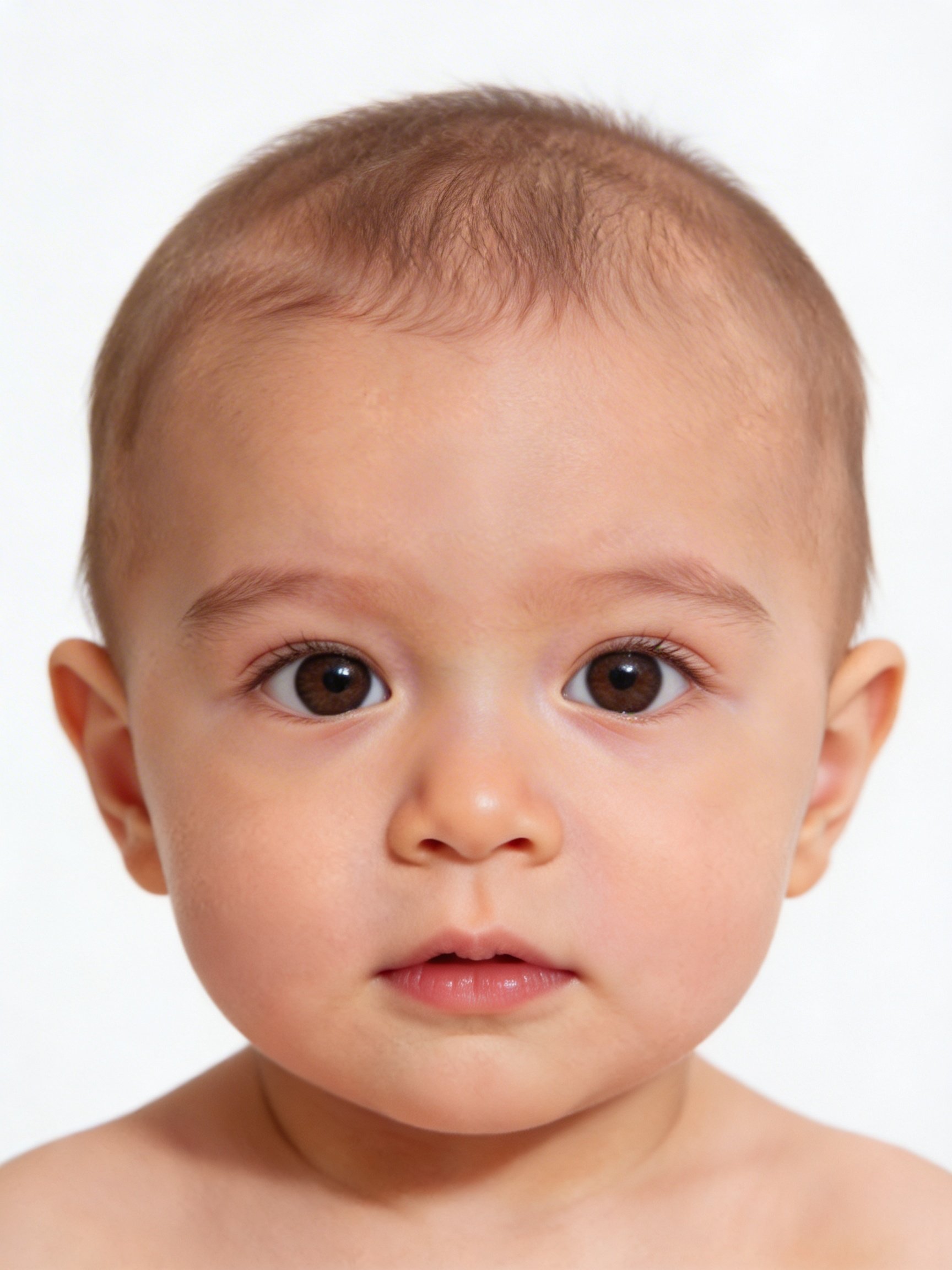
Printed photos must measure 35mm wide by 45mm tall (with a permitted range up to 38mm × 50mm). For digital submissions, the image must be at least 715 × 951 pixels in JPEG format. In both cases, your baby's face must occupy between 70% and 80% of the frame, from chin to the top of the head. Getting this proportion right is one of the trickiest parts of a home attempt, which is why professional framing is worth it.
Background Requirements
The background must be completely plain, light grey, white, or cream. No patterned blankets, no nursery wallpaper, no visible furniture. When photographing a baby at home, a plain white or cream sheet laid flat on the floor works well. The key is uniformity: any texture or shadow across the background can cause rejection.
How Long Is the Photo Valid?
Irish passport photo rules give you 6 months from the date the photo was taken, considerably more generous than some other countries. This is relevant for parents who take a good photo early on and then take time to gather the other application documents.
Baby and Infant Allowances
This is where the Irish rules become genuinely parent-friendly. The Department of Foreign Affairs acknowledges the practical reality of photographing very young babies:
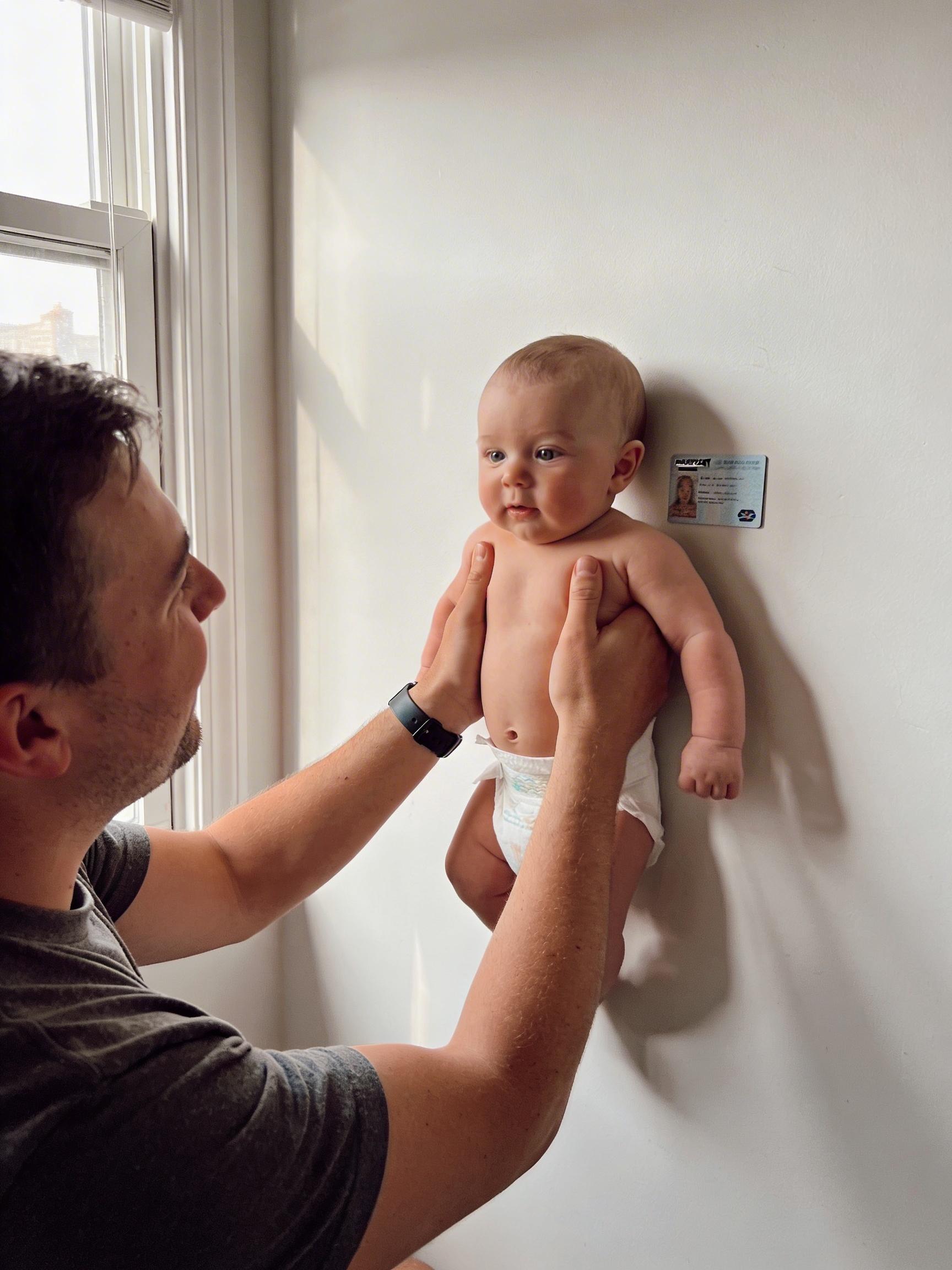
- Infants who cannot support themselves should be photographed lying down on a plain, white surface
- No supporting hands or arms may appear in the photo, but the lying-flat approach naturally keeps parents out of frame
- No soother or pacifier may appear in the image, as it obscures facial features
- The Passport Service explicitly notes it may be difficult to check and process photographs of babies aged 0–36 months, and the online system has a manual cropping option to help with this
| Requirement | Irish DFA Rule | Baby Provision |
|---|---|---|
| Printed size | 35mm × 45mm (up to 38mm × 50mm) | Same, no exception |
| Background | Plain white, light grey or cream | Same, no exception |
| Face coverage | 70–80% of frame height | Same, applies to all ages |
| Position | Looking straight ahead, no tilt | Lying flat is accepted for infants |
| Expression | Neutral, mouth closed | Natural infant expression accepted |
| Visible support | No other person in photo | Hands must be kept out of frame |
| Recency | Within the last 6 months | Same, no exception |
| Soother | Not permitted | Must be removed for the shot |
Age-by-Age Guide: Adapting the Session to Where Your Baby Is
Baby passport photos are not one-size-fits-all. What works beautifully at three weeks will be completely impractical at five months. Here is how to think about it at each stage.
Newborn to 8 Weeks: The Flat-on-Back Approach
At this age, head control is minimal and the only reliable technique is to photograph your baby lying on their back. A plain white blanket or sheet provides the required background while keeping them safely flat. The photographer, or a parent doing this at home, shoots from directly above, with the camera lens parallel to the baby's face.
Sessions at this age need patience: you are working around feeding and sleeping cycles, and the alert windows can be brief. Budget 20–30 minutes. A professional photographer who regularly works with newborns will pace the session entirely around your baby's signals.
2 to 5 Months: Support Chair and Semi-Upright Positioning
As your baby develops more neck strength, photographers can begin using a padded support chair or specialist infant seat that holds the baby in a semi-upright position, with no hands in the frame. This produces a cleaner, more upright shot that tends to process more easily through the Passport Service's digital system.
This window, roughly 8 to 20 weeks, is actually a sweet spot for passport photos. Babies are often naturally alert and curious, which helps get eyes open. First smiles may appear, and a gentle, closed-mouth smile is perfectly acceptable. Find a specialist for this age in our baby photographer directory.
6 Months and Beyond: Sitting with Supervision
Once your baby can sit independently and stably, more options open up. You can sit your baby on your lap, crouch behind them, and keep yourself completely hidden from the frame. Pharmacy photo services become a realistic option at this stage, though even here a specialist photographer is less stressful, babies at this age move fast and attention spans are short.
Getting Your Baby Ready: Timing and Practical Preparation
A little preparation before the session makes an enormous difference to the result. These are the practical steps that experienced photographers consistently recommend.
Choose Your Window Carefully
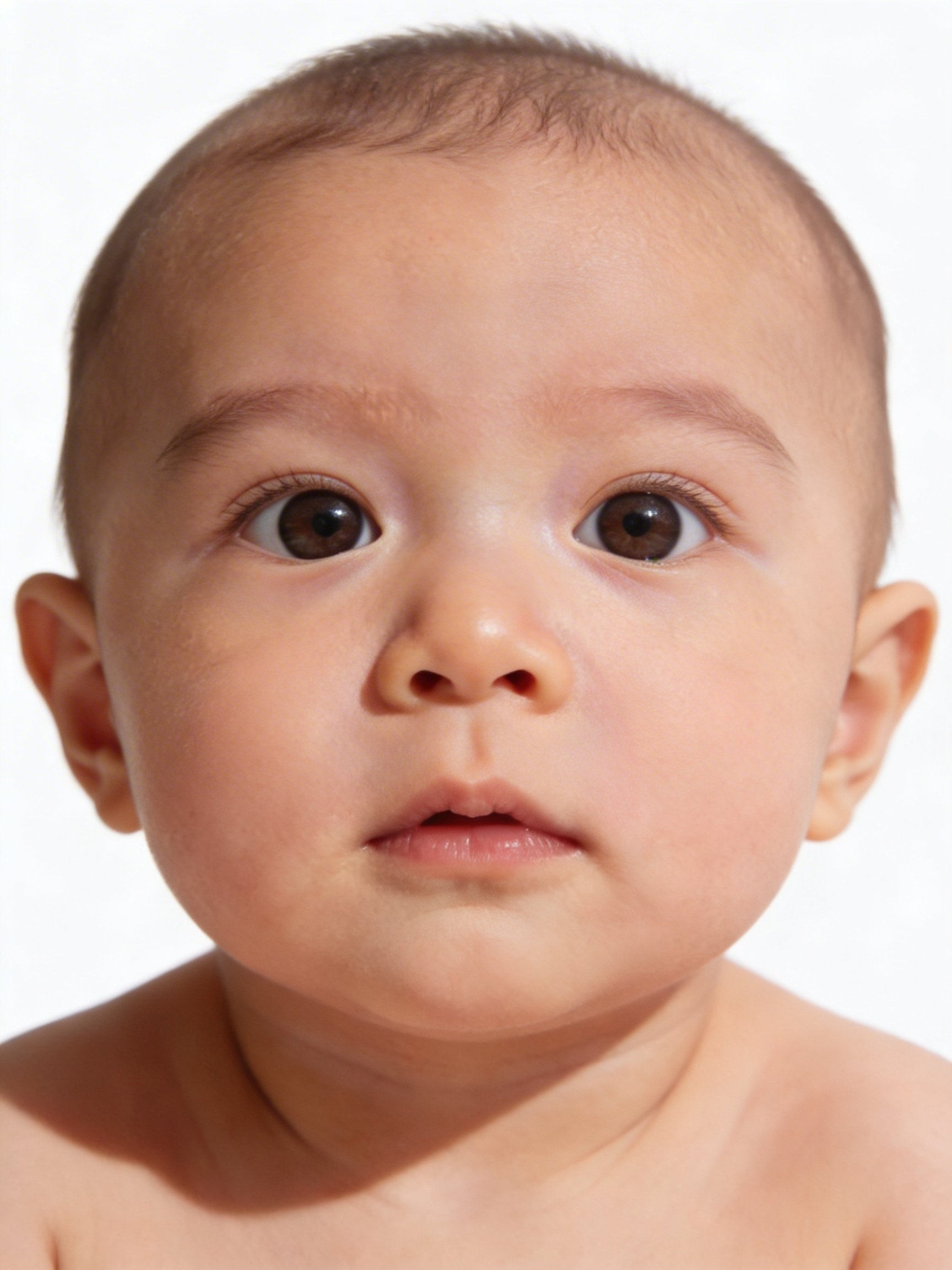
The ideal moment is 30–45 minutes after a feed, once your baby has eaten well but hasn't fallen asleep yet. This is the natural alert window, your baby is comfortable, not hungry, and more likely to cooperate. Steer clear of the pre-nap grumpy phase: drooping eyelids and a furrowed brow do not make for a usable passport photo.
Pay attention to your baby's individual patterns. Many babies have consistent alert periods mid-morning (around 9–11am) and again in the early afternoon. Book your pharmacy appointment or studio session during one of these windows rather than guessing.
Clothing: What Works and What Doesn't
Choose a coloured top or bodysuit, not white or very pale, which blends into the light background and makes the photo look washed out. Avoid large logos, bold patterns, or frills around the neck, which can draw attention away from the face. A simple, solid-coloured outfit with a clear neckline is ideal.
Keep forehead and ears visible, this means tying back longer hair simply, with no decorative bands or clips in the photo area.
What to Bring Along
- A comfort toy or rattle to settle your baby between attempts (remove it before the shot)
- A spare outfit, accidents happen, particularly when laying a baby flat
- A plain white or cream blanket if you plan to photograph at home
- A light-up or sound-making toy to hold beside the lens and attract your baby's gaze
- Water rather than a top-up feed just before, milk can trigger drowsiness

How to Keep Your Baby's Eyes Open for the Camera
Getting a clear, eyes-open image is the central challenge for parents of very young babies, even though the Irish rules do not strictly require open eyes for infants. Here are the techniques that work in practice.
The Rattle-Beside-the-Lens Method
Hold a gentle rattle, squeaky toy, or anything that makes a soft sound right next to the camera lens. Your baby's natural instinct is to look towards the source of the noise. Keep the toy small enough that it doesn't obstruct the lens, and use gentle sounds, a sharp noise can startle your baby into crying rather than looking.
Keeping a Newborn Alert
For newborns who drift in and out of sleep, a light touch on the soles of their feet or a gentle stroke along their arm can maintain a level of alertness just enough for their eyes to open. Keep your voice soft and calm, any excitement in the room can tip a newborn into either overstimulation or a startled cry. The goal is a quiet, barely-awake state.
Working with Natural Light
Soft natural light from a window makes it significantly easier for a baby to keep their eyes open than a direct camera flash, which causes instinctive blinking. A professional photographer uses reflectors and diffused lighting to replicate this quality indoors. If you are photographing at home, position your baby near a window but out of direct sunlight, indirect, even light is ideal.
Knowing When to Try Again Later
If your baby is having an off day, overtired, hungrier than usual, or simply determined to sleep, it is genuinely fine to reschedule. Because Irish passport photos remain valid for 6 months, there is no urgency that forces you to use a suboptimal image. A better shot taken a week later is always the right choice.
The 5 Most Common Reasons Baby Passport Photos Are Rejected
Understanding what goes wrong is often as useful as knowing what to do right. These are the five causes behind the vast majority of rejected applications.
1. A Background That Isn't Plain Enough
Even a faint pattern on a blanket, a shadow across the background, or the edge of a changing mat in the corner can trigger a rejection. The background must be completely plain, no texture, no tonal variation, no objects at the edges. A dedicated photo professional with a proper white backdrop eliminates this risk entirely.
2. Visible Hands or Arms in the Frame
This is the hardest requirement to meet for young babies who cannot hold themselves up. Any visible hands, even partially cut off at the edge of the frame, will result in rejection. The lying-flat technique and proper specialist equipment (infant support chairs that hold a baby without any physical contact appearing in shot) are the solutions.
3. A Soother Left in During the Shot
In the chaos of managing a fussy baby, it is surprisingly easy to forget to remove the soother before the photographer fires the shutter. The Department of Foreign Affairs is explicit: soothers obscure facial features and the photo will not be accepted. Keep a toy ready to substitute the moment the soother comes out.
4. Incorrect Face-to-Frame Proportions
The face must occupy 70–80% of the total frame height. Too small (too much headroom or chin space) and the photo will be rejected. Too zoomed in and the same applies. This measurement is straightforward for professionals but consistently trips up parents shooting at home without a reference guide.
5. A Photo That's Been Digitally Altered
The Department of Foreign Affairs is clear that photos must not be digitally enhanced or changed, this means no brightness correction, no contrast adjustment, no background replacement. If you use an app or online service to take your photo, make sure it submits the unaltered image. Background removal or colour-correction tools, even subtle ones, can flag your submission.
What It Costs: Baby Passport Photo Prices Across Ireland in 2026
With 54,062 births registered in Ireland in 2024 (CSO Vital Statistics 2024), demand for baby passport photos is steady across the country. Prices vary considerably depending on where you go.
| Service | Typical Price | What You Get | Best Suited To |
|---|---|---|---|
| Pharmacy / chemist service | €7–€13 | 4–6 prints, sometimes + digital | Babies 4 months+ |
| Specialist photo studio (e.g. Conns Cameras, Photo Care Dublin) | €10–€18 | 4–6 prints + digital copy | All ages including newborns |
| Professional baby photographer (studio) | €15–€25 | Multiple attempts, equipment for newborns | 0–5 months especially |
| Photo-Me self-service booth | €8 | 4 prints + unique digital code | 6 months+ (sitting unaided) |
| At-home digital service / app | €5–€10 | Digital submission only | All ages (online application) |
| Home-visit photographer | Variable (on request) | Session at your home | Premature or fragile newborns |
In cities like Dublin, Cork, Galway, and Limerick, you have the widest choice of specialist photographers and pharmacy services. In smaller towns, pharmacies are often the most accessible option, and most can handle infant photography. Browse photographers near you in our baby photographer directory for verified local options. For a full breakdown of session costs, see our 2026 Irish baby photographer price guide.
Under the CCPC consumer rights guidance, any photographer or photo service must be able to provide a clear price quote before you commit. Make sure you understand what's included, number of prints, digital copy, and any re-shoot policy if the first attempt doesn't meet passport requirements.
Questions Irish Parents Ask Most Often
Does my baby need to have their eyes open in the photo?
Not strictly, the Irish Passport Service acknowledges the difficulty of photographing babies aged 0 to 36 months, and does not apply the same eye-contact rules that apply to adults. That said, a clearer photo with eyes visible will process more smoothly and produce a better identity document over the life of the passport. It's always worth trying to capture an alert moment, even if it takes patience.
Can I take the photo myself at home?
Yes, and the Irish online passport application system actually makes this a viable option, with a built-in cropping tool to help you frame your baby's face correctly. You'll need a plain white or cream background (a sheet on the floor works), soft even lighting, and a steady hand. The main pitfalls are getting the face proportion right (70–80% of frame height) and avoiding any digital processing of the image before upload. For many parents, spending €10–€15 at a specialist service is easier and more reliable than getting all of this right at home.
How long is an Irish baby passport photo valid for?
Photos must have been taken within the last 6 months at the time you submit your application. This is relatively generous, it means you can take the photo early after birth and still have time to gather all your other documents before applying.
My baby uses a soother constantly, what do I do?
Remove the soother for every attempt, and have a distraction ready immediately, a light-up toy, a gentle sound, a parent's face, so your baby doesn't react to losing it by crying. The Department of Foreign Affairs explicitly disallows soothers in passport photos because they obscure the mouth and chin. It helps to remove the soother just a moment before the shot rather than well in advance.
How should I position a newborn who can't hold their head up?
Lay your baby on their back on a completely plain, white surface. The photographer takes the shot from directly above, camera level with the baby's face. No cushions, patterned blankets or textured surfaces behind the baby, the white surface is the background. In this position, it's also much easier to keep supporting hands out of the frame, which is one of the main requirements for infant passport photos.
Can I use a passport photo taken for a previous application?
Only if it was taken within the last 6 months, and given how rapidly babies change in their first year, a photo that is more than a few months old will probably no longer look like your child anyway. Always use a fresh photo taken close to the date of application.
Where can I get a baby passport photo in Dublin, Cork, or elsewhere in Ireland?
Options exist in every major town and city. In Dublin, specialist photo studios such as Photo Care and 1Portrait offer professional passport photo sessions. Pharmacies throughout Ireland, including chains and independent chemists, provide a staff-operated service at a reasonable price. Photo-Me booths in post offices and shopping centres are suitable for older babies who sit independently. For the youngest babies, a specialist baby photographer with proper newborn equipment is the most dependable route. Search your area in our directory of Irish baby photographers to find a vetted local professional.
Making the Most of This Moment
A passport photo is a functional document, but it's also, unexpectedly, one of the earliest official records of your child's face. Parents who have been through this often look back at that tiny photo years later with genuine fondness.
The best approach is a simple one: prepare well, choose the right time of day, and work with someone who knows how to read a baby's rhythms. If it doesn't go perfectly the first time, that's fine. You have 6 months before the photo expires, and babies are endlessly patient subjects when you meet them on their own terms.
If you'd like to celebrate this stage with something beyond the passport queue, explore our photography guides by developmental stage, from newborn sessions in the first two weeks right through to standing and walking. Every milestone in that first year deserves its own record.
Find Baby Photographers Across Ireland
Browse photographers in your county, compare portfolios, experience with newborns, and pricing from carefully selected specialists across the island.
Search All Irish Photographers →Related articles
Looking for a professional baby photographer? Explore our complete directory of baby photographers in Ireland.

